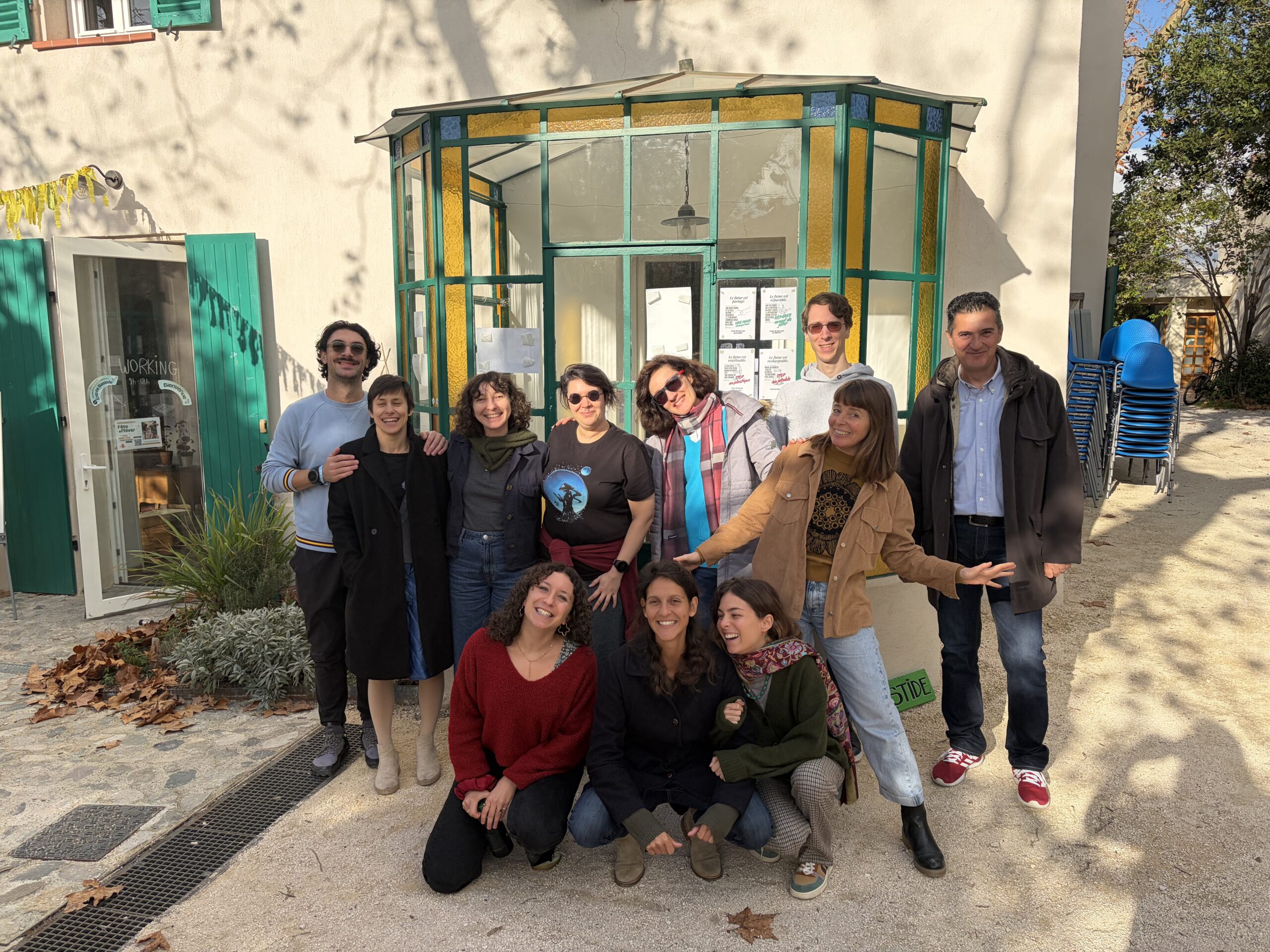
At its kick‑off meeting, the project partners gathered to lay the foundations of a collective endeavour dedicated to participatory democracy and ecological transition.
An Erasmus+ project to strengthen the role of citizens in the ecological transition
Funded by the Erasmus+ KA220 programme, Agora 2030 is rooted in a strong belief: the ecological transition must be built with citizens, as close as possible to local territories. And in this effort, third places play a key role. As hybrid, open, and locally‑anchored spaces, they have become privileged environments for experimentation, debate, learning, and collective action.
Third places as key actors in participatory democracy in Europe
This first exchange allowed the European partners to get to know each other better, share field experiences, and compare their national contexts. The discussions highlighted the diversity of third places across Europe, as well as the common ground they share: often participatory governance, strong citizen‑mobilisation capacity, and an under‑exploited potential to support the ecological transition.
Agora 2030: Concrete Actions to Support Citizen Engagement
The coming months promise to be rich in activities and outputs. Agora 2030 will notably develop:
- an analysis of needs and existing practices within the partner third places,
- practical educational tools for field practitioners,
- pilot actions encouraging citizen engagement around ecological challenges,
- and recommendations to strengthen the recognition and support of third places at both local and European levels.
As a project partner, Pour la Solidarité is fully committed to this collective dynamic. Through Agora 2030, PLS continues its work in favour of more sustainable, inclusive, and participatory models, highlighting local initiatives and the capacity of citizens to act as agents of change.